


In stock | Ships within 24/48 hours
Be careful, there are only
items in stock!
Victim of his own success

 x1
x1
21,90€
x2
43,80€
41,62€
x3
65,70€
59,13€
Couldn't load pickup availability
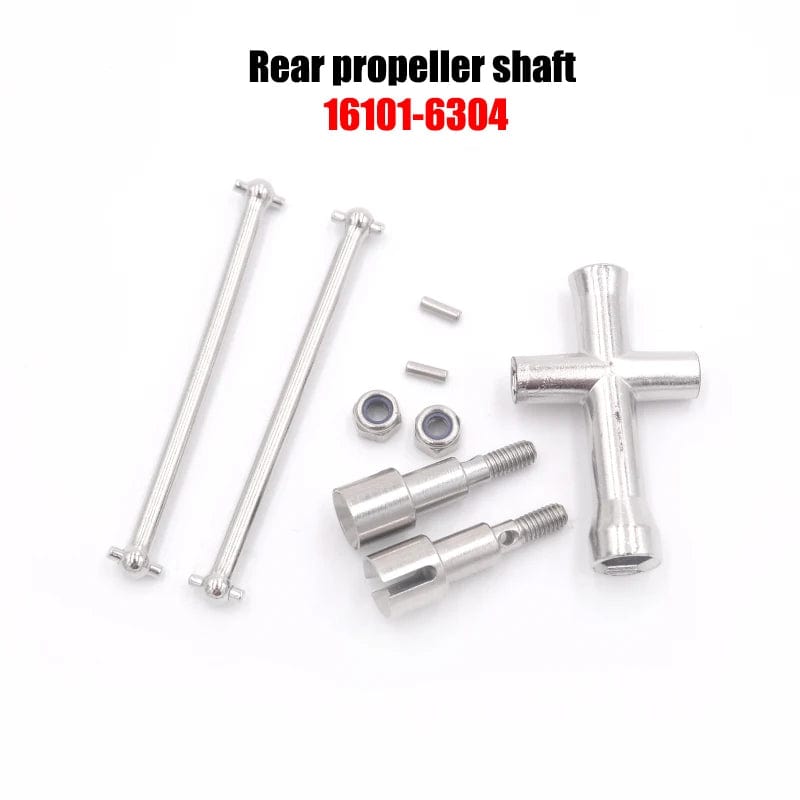
Are your rear wheels no longer turning while the motor is running? Do you only have front-wheel drive left? The rear drive shaft is the part that transmits power from the central differential to the rear wheels. When it breaks, you lose rear traction and your vehicle becomes front-wheel drive only.
This Rear Drive Shaft 16101-6304 is the exact original part factory-installed on the PRO versions of your SCY. Made from machined metal for maximum durability, it instantly restores full 4x4 transmission, allowing you to regain traction on all four wheels.
This drive shaft is compatible with the following models:
• SCY 16101 PRO
• SCY 16102 PRO
Expand to see the answers.
If the motor runs but only the front wheels turn (the rear wheels do not), the rear drive shaft is probably broken. Inspect visually: if you see the shaft in two pieces or cracked, it must be replaced immediately.
Yes, this metal shaft is an excellent upgrade for standard versions. It replaces the original plastic shaft and significantly improves durability. Just make sure the dimensions match.
Avoid sudden rear wheel lock-ups (for example, hitting an obstacle at full speed). These shocks transmit huge torsional stresses to the shaft and can break it instantly. After each session, visually check the shaft: any emerging crack should be addressed before it becomes a complete break.

✔ Already more than 600 customers successfully served!